- English
- 简体中文
- שפה עברית
- lugha ya Kiswahili
- ગુજરાતી
- Hausa
- ಕನ್ನಡ
- Punjabi
- پښتو
- سنڌي
- Sundanese
- Yoruba
- Español
- Português
- русский
- Français
- 日本語
- Deutsch
- tiếng Việt
- Italiano
- Nederlands
- ภาษาไทย
- Polski
- 한국어
- Svenska
- magyar
- Malay
- বাংলা ভাষার
- Dansk
- Suomi
- हिन्दी
- Pilipino
- Türkçe
- Gaeilge
- العربية
- Indonesia
- Norsk
- تمل
- český
- ελληνικά
- український
- Javanese
- தமிழ்
- తెలుగు
- Eesti Keel
- Română
- मराठी
- فارسی
- नेपाली
- Burmese

Why Are UVLED Screen Printing Inks Redefining Modern Industrial Curing Standards?
For years, manufacturers have sought a curing solution that balances energy efficiency, substrate versatility, and environmental responsibility. The emergence of UVLED Screen Printing Inks has shifted the paradigm across glass, ceramic, metal, and plastic decoration. Unlike conventional drying methods that rely on heat or prolonged air exposure, UVLED technology delivers instant photopolymerization. This advancement eliminates volatile organic compound evaporation delays and reduces floor space dedicated to curing tunnels. Industry engineers now prioritize UVLED formulations when designing high-speed production lines for items such as insulated beverageware, protective gear, intricate ceramic art pieces, and precision electronic housings. The shift is not merely incremental; it represents a foundational change in how curing energy is generated, controlled, and applied.
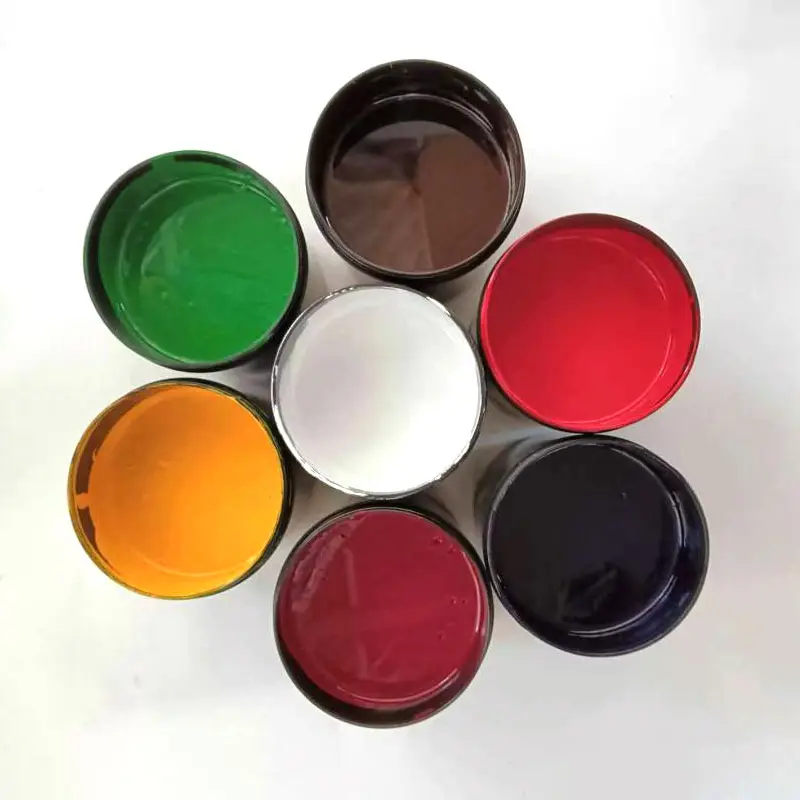
Decoding the Technical Superiority
UVLED (ultraviolet light-emitting diode) systems emit narrow-bandwidth ultraviolet radiation, typically at wavelengths of 365 to 395 nanometers. This focused energy triggers an instantaneous cross-linking reaction within specially formulated photoinitiators. The result is a fully cured ink film that resists abrasion, chemical attack, and thermal cycling. Traditional mercury arc lamps, by contrast, generate broad-spectrum UV, significant infrared heat, and require warm-up periods. Manufacturers who integrate UVLED Screen Printing Inks into their screen-printing cells report drastic reductions in substrate warpage, especially for heat-sensitive plastics and thin-wall glass. Furthermore, the instant cure capability enables downstream processes like hot foil stamping or laser engraving immediately after printing, thereby compressing production timelines without sacrificing layer adhesion or gloss retention.
Energy Consumption and Operational Cost Advantages
One of the most compelling drivers for adopting UVLED technology is the dramatic decrease in electrical demand. UVLED units convert nearly all input electricity into usable UV irradiance, whereas mercury lamps waste a substantial portion as heat. This thermal inefficiency necessitates industrial ventilation and cooling systems, adding to facility operational expenses. With UVLED arrays, workers experience cooler ambient temperatures near the printing station, and the instant on/off capability eliminates idle energy draw. For a facility running multiple shifts, the cumulative energy savings can be redirected toward research or higher-quality raw materials. The table below contrasts the typical characteristics of legacy curing methods against modern UVLED systems, underscoring why engineering teams are redesigning their print shops around UVLED technology.
| Curing Parameter | Mercury Arc Lamp System | UVLED Screen Printing Ink System |
|---|---|---|
| Start-up behavior | Preheat required; slow stabilization | Instant on/off, no idle consumption |
| Substrate heat load | High infrared emission | Minimal thermal transfer |
| Lifespan of emitter | Limited hours; frequent replacement | Extended operational life |
| Consistency of output | Degrades over bulb life | Stable irradiance over long period |
| Floor space requirement | Large curing tunnels | Compact LED heads |
Substrate Versatility Across Industrial Sectors
UVLED curing excels on materials that previously posed adhesion challenges. For tempered glass used in smart kitchen scales or decorative panels, the low-heat profile prevents micro-fractures. On ceramic substrates—ranging from artisanal coffee cups to architectural tiles—the ink film bonds tenaciously without inducing glaze crazing. Metal components such as bicycle frames and helmet visors benefit from the instant cure, which prevents dot gain and maintains fine halftone details. Plastic parts made of polycarbonate, ABS, or PET film are notoriously vulnerable to thermal distortion; UVLED's gentle process ensures dimensional stability. Additionally, the inks exhibit excellent flexibility post-cure, enabling post-printing forming operations like bending or die-cutting without edge cracking. This combination of properties has made UVLED technology the go-to specification for safety equipment manufacturers and premium drinkware brands alike.
Meeting Regulatory and Environmental Mandates
Global regulations continue to tighten restrictions on hazardous air pollutants and workplace solvent exposure. Water transfer printing and conventional screen inks often rely on evaporation or heat-driven drying, releasing solvent vapors that require expensive abatement systems. UVLED Screen Printing Inks are formulated with minimal reactive diluents and zero traditional solvents, translating to near-zero VOC emissions during cure. This compliance advantage simplifies permitting and reduces the administrative burden of emission reporting. Furthermore, the absence of ozone generation—a byproduct of short-wave mercury lamps—improves indoor air quality. Factories can position UVLED curing stations directly on production floors without heavy exhaust ductwork. Environmental product declarations (EPDs) increasingly favor UVLED-based processes, giving downstream brands a marketing edge when they highlight sustainable manufacturing practices.
Integration with Automated Production Lines
Modern screen printing machinery often incorporates robotics, vision alignment, and inline quality control. UVLED units naturally complement automation because they require no warm-up, can be triggered by print carriage movement, and deliver consistent energy output regardless of line speed fluctuations. For example, a rotary screen printer decorating cylindrical flasks or insulated tumblers can synchronize UVLED exposure with each index of the turret. The instant cure allows the parts to be unloaded directly into packing stations without intermediate racking. Similarly, flatbed printers handling sheet glass for cooktops or electronic covers use dual-head UVLED arrays to cure large areas uniformly. Industry data indicates that lines retrofitted with UVLED technology experience shorter changeover times between different ink colors or substrate thicknesses because there are no complex ventilation adjustments.
Addressing Common Implementation Challenges
Engineers transitioning to UVLED curing sometimes underestimate the importance of ink chemistry compatibility. Not all photoinitiators respond efficiently to UVLED's narrow wavelength peak; therefore, selecting inks specifically engineered for LED emitters is critical. Another consideration is the cost of LED arrays, though the total cost of ownership typically remains favorable when factoring in lamp replacement, energy, and maintenance savings. For screen printers who previously used solvent-based drying racks, the shift demands training on handling the instantly dry ink film—since the printed surface becomes non-tacky immediately after exiting the curing zone. Additionally, shadow areas on three-dimensional objects may receive less irradiance, but modern multi-directional LED heads and rotational fixtures overcome this limitation. Workshops that adopt a systematic approach—starting with a pilot UVLED station for one product family—often scale the technology across all their presses within one fiscal year.
Case in Focus: Decorating Heat-Sensitive Thermoplastics
Thin-wall polycarbonate liners for double-wall mugs represent a difficult decorating challenge. Traditional oven drying would distort the liner's snap-fit geometry, while air-drying slows production to unacceptable speeds. By employing a low-intensity UVLED exposure combined with specialized screen inks, the liner emerges fully cured without dimensional change. The high cross-link density also imparts resistance to dishwasher cycles and citrus beverages. Several sports bottle manufacturers have migrated entire product lines to this process, reducing their reject rates by a significant margin. This success has driven interest from medical device decorators who need permanent legends on syringe barrels or laboratory consumables made of cyclic olefin copolymer. The reliability of UVLED curing in such demanding scenarios reinforces its status as an essential industrial tool.
Quality Assurance and Testing Protocols for UVLED-Cured Prints
Ensuring robust cure is paramount because under-cured prints may exhibit poor adhesion and leachable components. Industry best practices include daily radiometer measurements to verify that the LED head delivers the required millijoules per square centimeter. Additionally, tape adhesion tests following ASTM D3359 must show no removal from glass, ceramic, or metal surfaces. Solvent rub tests with methyl ethyl ketone or isopropyl alcohol confirm the chemical resistance of the cured layer. For items intended for food contact—such as coffee cup saucers or ceramic plates—the cured inks must pass migration testing according to regional regulations. Many suppliers of UVLED Screen Printing Inks provide integrated irradiance monitoring that alerts operators when output drops below set thresholds. A systematic quality plan, documented in a control chart, ensures that every production batch meets the stringent mechanical and aesthetic specifications demanded by premium brand owners.
Future Trajectories: Custom Wavelengths and Hybrid Curing
Research into UVLED technology continues to advance, with prototype systems offering tunable wavelengths that activate different photoinitiator families within a single pass. This development could allow printers to cure both pigmented layers and clear overcoats using the same LED head by simply shifting the emission spectrum. Another frontier is hybrid curing, where a short burst of traditional UV fills any shadow areas after the primary UVLED exposure, combining the best of both worlds. As LED chip efficiency improves, higher irradiance levels will support faster line speeds without increasing thermal load. For screen printers currently evaluating capital investments, selecting modular UVLED units that can be upgraded with newer wavelengths ensures future-proof equipment longevity. The convergence of digital inkjet and screen printing on shared UVLED platforms is also on the horizon, enabling mixed-production workflows that were previously impossible.
Economic Justification for Technology Retrofit
Finance managers often request a clear return-on-investment calculation before approving UVLED adoption. The key factors include reduction in energy bills, elimination of solvent purchase and disposal costs, lower scrap rates from heat damage, and decreased maintenance labor for ventilation systems. Furthermore, UVLED arrays last thousands of hours without the gradual decay seen in mercury bulbs, so consumables spending drops significantly. Many enterprises find that the payback period for retrofitting a single screen printing line falls within twelve to eighteen months of operation. Additionally, the ability to market products as "low-VOC cured" opens new distribution channels with environmentally conscious retailers. When combined with the space savings from removing large drying tunnels, the economic case becomes overwhelmingly positive for most medium-to-high volume manufacturers.
Why Experience and Technical Support Matter
Successful implementation of UVLED curing extends beyond purchasing hardware and ink. It requires a partner that understands press integration, photoinitiator chemistry, and substrate-specific troubleshooting. A qualified supplier will analyze the customer's current workflow, measure existing irradiance levels, and recommend the optimal LED head distance as well as cooling configuration. They also provide hands-on training for operators to adjust stencil thickness, squeegee pressure, and snap-off distance to achieve the desired ink deposit. Without this level of support, a factory may face issues like incomplete cure in the center of large solid areas or over-curing that reduces flexibility. Therefore, selecting an established manufacturer with a proven track record in UVLED screen printing applications is a strategic decision that directly influences production uptime and final product quality.
For over thirteen years, the team behind Yongxiu County Lijun Technology Co., Ltd. has refined production, research, and service models to meet evolving industrial demands. In 2017, the company expanded into Jiangxi Lijunxin Technology Co., Ltd., broadening its portfolio to include advanced UVLED-based screen printing formulations alongside water transfer printing inks, films, and hot stamping products. Their comprehensive approach covers glass, ceramic, metal, and plastic decoration across industries such as drinkware, sporting goods, protective helmets, and intricate handicrafts. Adhering strictly to a philosophy of quality assurance, collaborative integrity, and continuous improvement, the company stands ready to assist manufacturers seeking to transition to UVLED curing or optimize existing screen printing operations. By combining deep material science knowledge with practical on-site support, Jiangxi Lijunxin Technology Co., Ltd. exemplifies the reliable partnership that modern screen printing workshops require.
As global manufacturing intensifies pressure to reduce waste, energy consumption, and hazardous emissions, UVLED curing technology emerges not as a luxury but as a foundational component of competitive screen printing. The shift toward instant, low-heat, environmentally clean curing is already reshaping production floors for insulated cups, ceramic dinnerware, automotive components, and countless other decorated goods. Companies that embrace UVLED Screen Printing Inks now will secure operational advantages that extend well into the next decade, positioning themselves as leaders in sustainable, high-speed industrial printing. The technical pathways are clear; the economic returns are measurable; and the supporting supply chain continues to mature. Now is the moment for decision-makers to evaluate their current curing infrastructure and take the next step toward UVLED integration.